
The harsh climate in Illinois means that Chicagoland residents must make the right decisions when choosing roofs and maintaining them. As is widely known, asphalt shingles remain the most popular roofing material in the United States due to their durability, ease of use, and low price. Do they still perform as well in Illinois? If you are planning a roof replacement trying to choose between standing seam metal roofing and asphalt shingles, this article will be helpful.
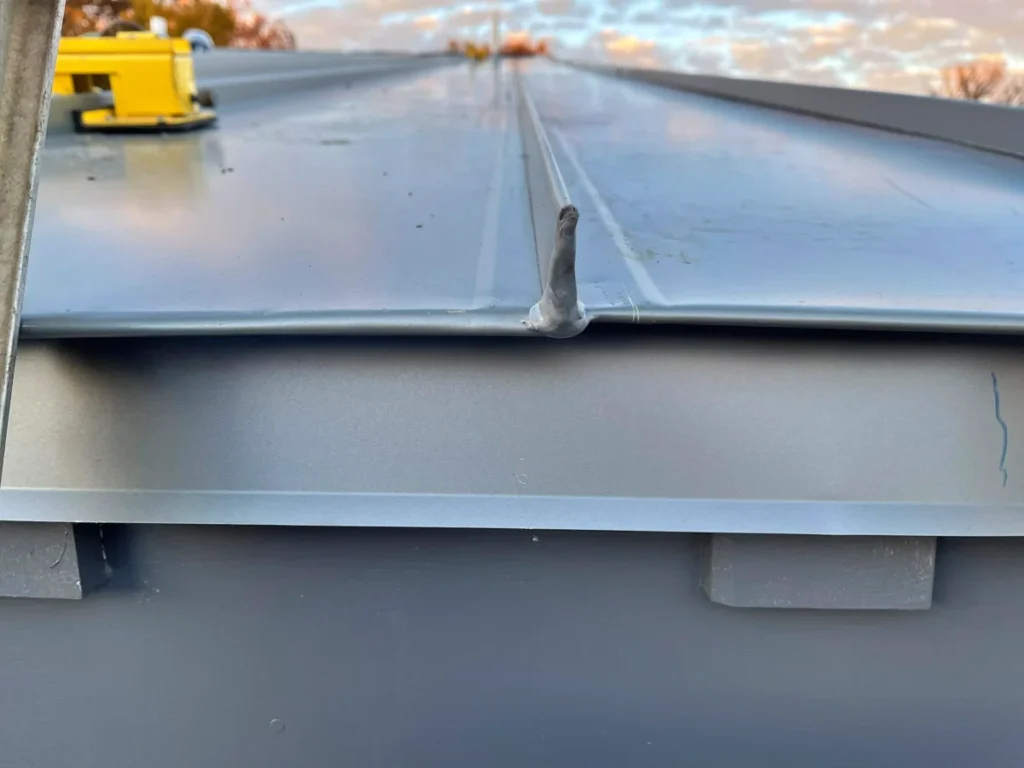
To begin with, we need to say that in practice, metal roofs don’t really compete with asphalt shingles in residential roofing. Even though metal roofing outperforms asphalt shingles in most key areas, including durability and lifespan, shingles are commonly chosen, mainly because of their affordability, ease of installation and accessibility.
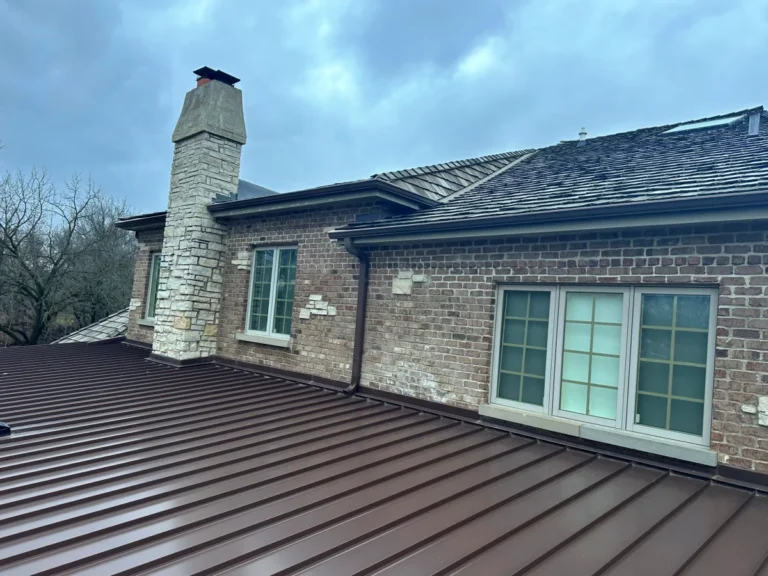
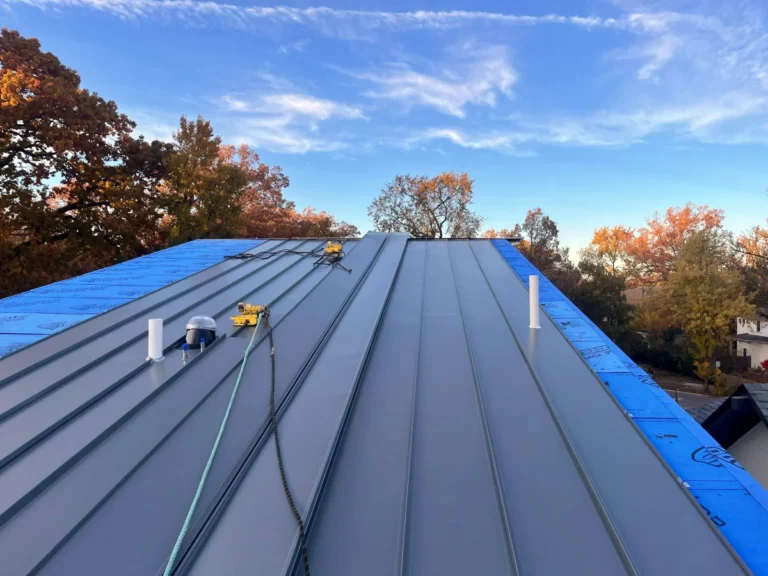
While homeowners all over the country hardly ever order metal roofing panels for the entire roof, it happens sometimes. Despite being much more expensive than asphalt shingles ($1,300-$1,800 per square, compared to $450-$750), metal roofs are one of the best materials, especially for someone willing to live in their house for decades. A properly installed metal roof can last more than 50 years and virtually doesn’t leak at all.
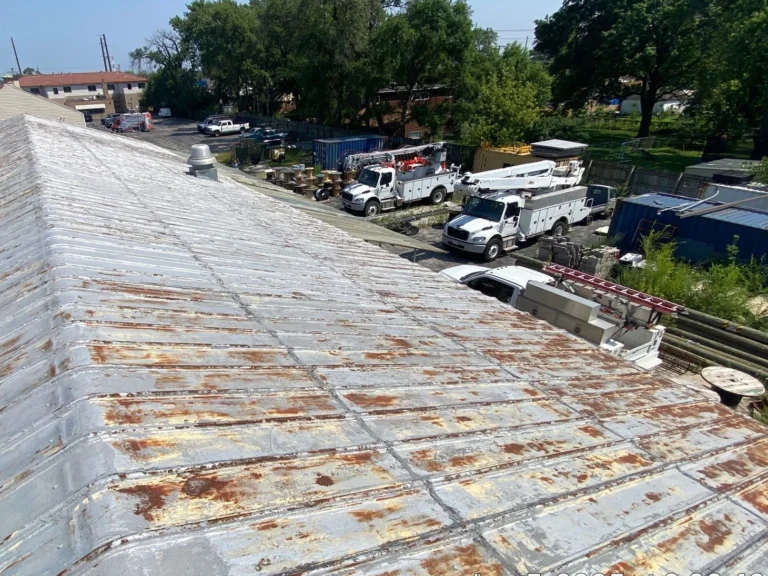
However, we need to admit that in most of the cases, steel roofs tend to corrode after some time, while asphalt shingles obviously don’t. On the other hand, asphalt shingles absorb heat and, after some time, their structure deteriorates too, just in a different way. As you may suppose, there are dozens of roofing options available, but each of them has pros as well as cons.
Living in Chicagoland means that your home is constantly exposed to variable threats. High temperature during the summer, humid falls, snowy winters and hailstorms pose a real threat to your roof and there’s no way to avoid. All you can do is to choose the means to resist these occurrences. Significant temperature fluctuation throughout the year and vicinity of the Lake Michigan mean that you need to invest more in everything exposed to the weather.
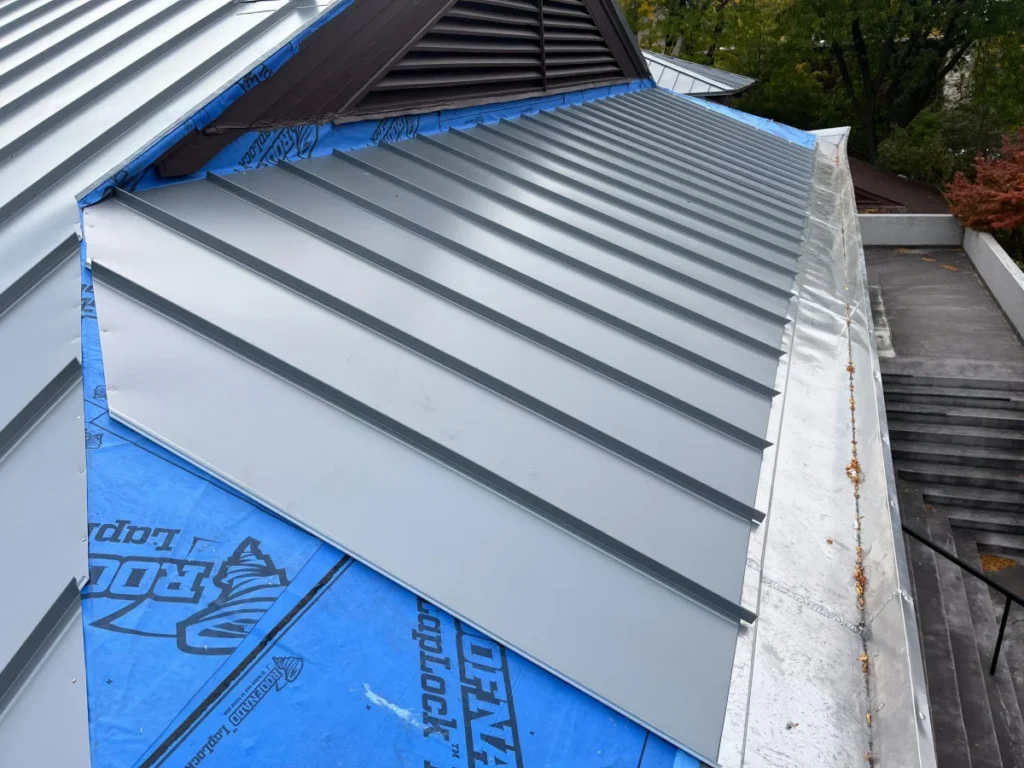
As we have already mentioned, the biggest differences between metal and asphalt roofs lie in their lifespan. Basic three-tab shingles usually last for 20-25 years, sometimes even less, if the roof ventilation system isn’t efficient enough. Metal roofing often lasts for up to 50 or 60 years, and, what’s even more important, requires less maintenance. Relatively high humidity of Chicagoland and UV radiation during the summer are simply irrelevant for PVDF-coated steel.
Every year, more and more people find problems with ice damming and leaking. This phenomenon is primarily an effect of over-insulating the houses – since contractors have started using more efficient insulation materials, the snow stopped melting on the roofs. Unfortunately, the snow accumulating in the roof valleys increases the risk of leaking. According to our research, when improperly secured with Ice & Water Shield, metal roofs tend to be more prone to leaking than asphalt shingles. The lower the roof’s pitch, the more this problem is visible, therefore we don’t recommend installing standing seam roofs with a slope lower than 3/12.
Considering the climate of northern Illinois, it is easy to conclude that it is not particularly favorable for roofing materials. However, it is important to remember to consider the changes caused by external factors in the context of the expected lifespan of both materials – asphalt shingle roofs typically last up to 20-30 years, while metal roofs last even as long as 70 years. So let’s see how metal roofs and asphalt shingle roofing perform in the climate typical of Illinois. At the end of the day, choosing the right roofing material with affect your financial situation for sure.
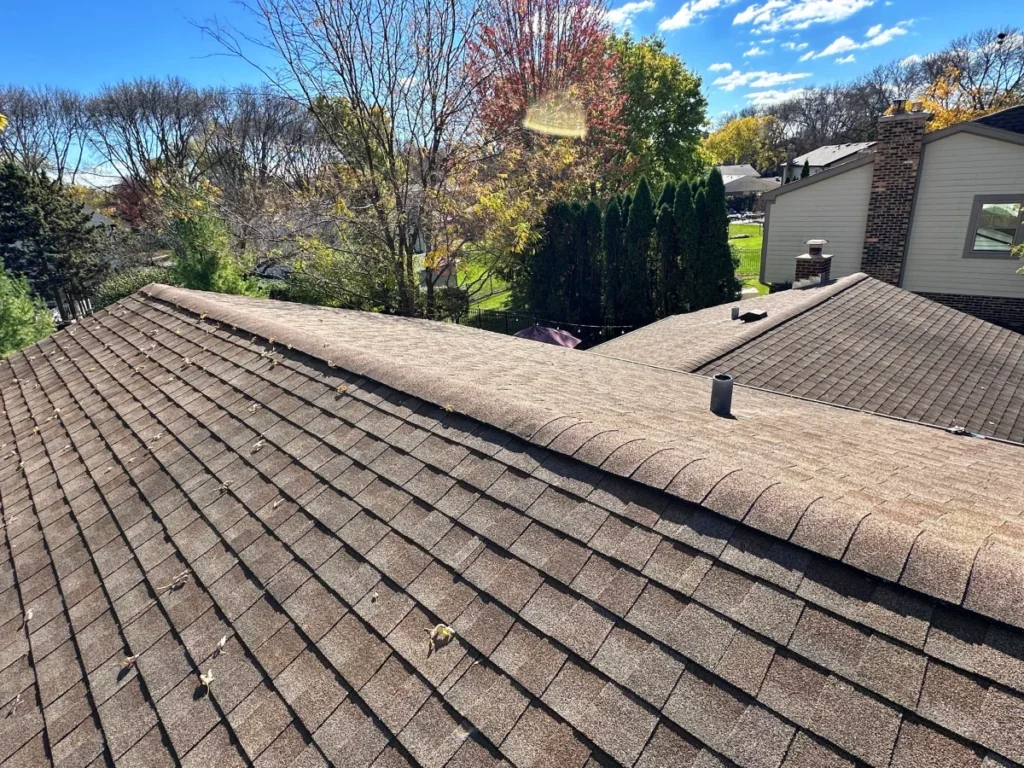
First, let’s take a closer look at asphalt shingles. Although it is often claimed that they can last 30 years or more, when exposed to the harsh environmental conditions prevailing in Chicagoland, their lifespan may turn out to be shorter. This is due to several important factors:
After a few years, asphalt shingles cease to be perfectly watertight. Of course, this does not mean that there is an immediate risk of leakage, but microcracks or gaps form between the shingles, allowing water to enter. Even small amounts, subjected to temperature fluctuations and repeated freeze-thaw cycles, cause larger cracks to form on the further stages of life of the roof. As a result, the wear process is accelerated and the shingles age faster.
This effect is exacerbated when ice dams begin to form at the edge of the roof. This happens when temperature fluctuations are accompanied by heavy snowfall. Ice jams at the edges prevent water flowing from higher parts of the roof from draining away, so it backs up and settles on the shingles.
Due to the very warm summer, shingles also have a hard time at this time of year. Solar radiation and temperature have a very destructive effect on them. The temperature alone causes the asphalt to soften, and UV radiation further breaks down the chemical bonds in the bitumen. As a result, the material oxidizes, dries out, and loses the additives that give it elasticity, such as paraffin or petroleum oils. As a result, the surface of the shingle becomes stiff and more brittle. That’s why, asphalt shingles generally don’t perform well in hot places, such as Texas or Arizona.
Moisture is also an enemy of asphalt shingles, which, when combined with favorable conditions, significantly shortens the life of the material. The three most important factors are:
Such conditions are conducive to the growth of moss, which appears between the shingles. Moss is dangerous for the roof due to its properties – it acts a bit like a sponge that absorbs water. The presence of moss on the roof causes moisture to remain, leaving the roof wet for a long time (which becomes very harmful when the temperature drops below 32 Fahrenheit degrees).
In addition to moss, algae can also appear on the roof. Although they do not cause significant mechanical damage (they retain moisture to a small extent), they greatly affect the aesthetics of the roof, creating dark spots and streaks.
When talking about asphalt shingles in Illinois, we cannot forget about the significant impact of windstorms and hailstorms on the condition of roofing. Strong winds, driven by Lake Michigan, pose a high risk of mechanical damage due to impacts from branches and other debris. What’s more, strong winds (above 60-70 mph) can undermine the edges of the shingles, which can even cause them to detach from the roof. This phenomenon is even more dangerous when the shingles are already slightly worn and no longer have their original resistance. Hailstorms are also not a good factor – the crushing of granules has a very negative effect on the material’s resistance to UV radiation and creates microcracks, which, as we know, provide space for water to settle. In extreme cases, heavy hail can even penetrate the roof covering.
Asphalt shingles are the most common roofing material for a reason – it’s a solid compromise between quality and cost. Even though shingles are typically recognized as a budget-friendly roofing material, we install them on $2- or $3-million dolar homes too.
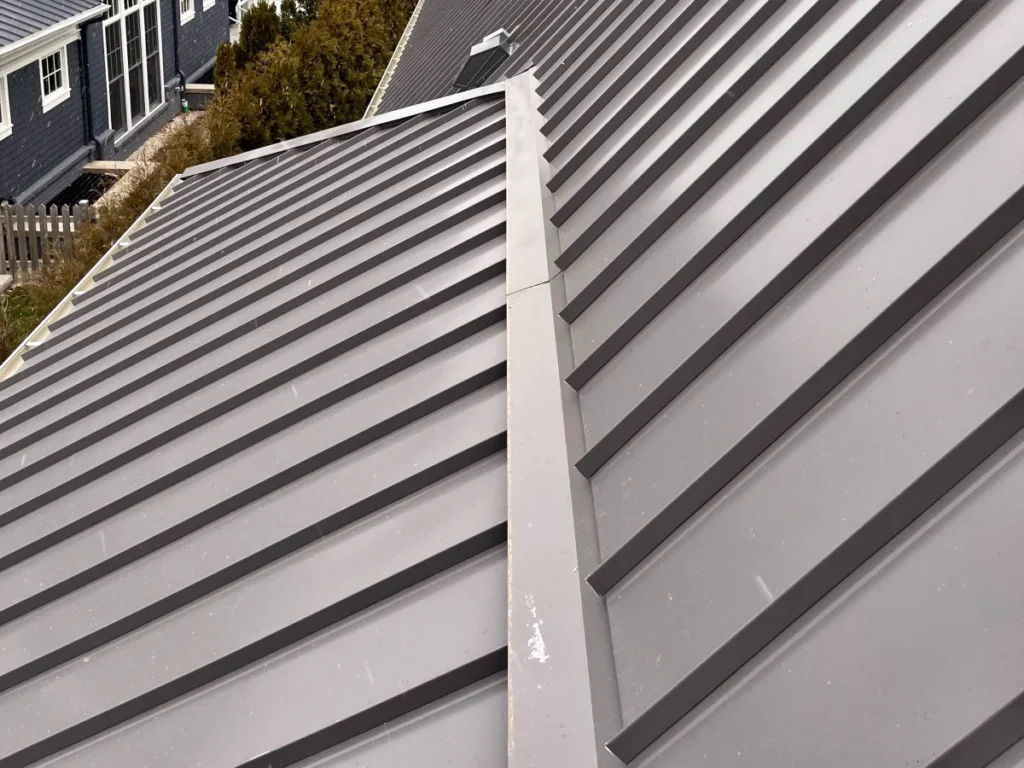
Metal roofs, due to their completely different characteristics, will face the harsh climate of northern Illinois in a completely different way. So let’s see how the same factors will affect steel roofing.
The factor that posed the greatest threat to asphalt shingles was water. Forcibly, steel roofing panels are constructed in a completely different way and are completely watertight, allowing water to run off them easily. The only points at risk of moisture retention and possible leakage are the joints and fastenings. This is where the first leaks can occur when the seals wear out after a dozen or so years.
The second, much more important risk associated with water in the context of steel roofs is the development of corrosion. Rust is the bane of every steel roof owner, but the whole issue is not as scary as it seems. Each steel roof component is covered with a protective layer, such as reliable Galvalume or Kynar 500. The threat only arises when the coating is significantly damaged.
In the Illinois climate, mechanical damage is not uncommon, mainly due to strong winds and hailstorms (especially when they occur at low temperatures, as steel becomes more brittle). Of course, a few hailstorms will not cause the roof to corrode, but it is definitely worth inspecting it from time to time for major damage. Remember, the sooner you detect a threat, the lower your future costs will be. On the other hand, in the world of metal roofing, there’s no such a thing as missing or damaged shingles.
When it comes to cold winters in Chicagoland, steel roofs perform much better than asphalt shingle roofs. Falling snow is not a threat, as the sheets freely drain it to the ground, and the risk of ice dams is lowered.
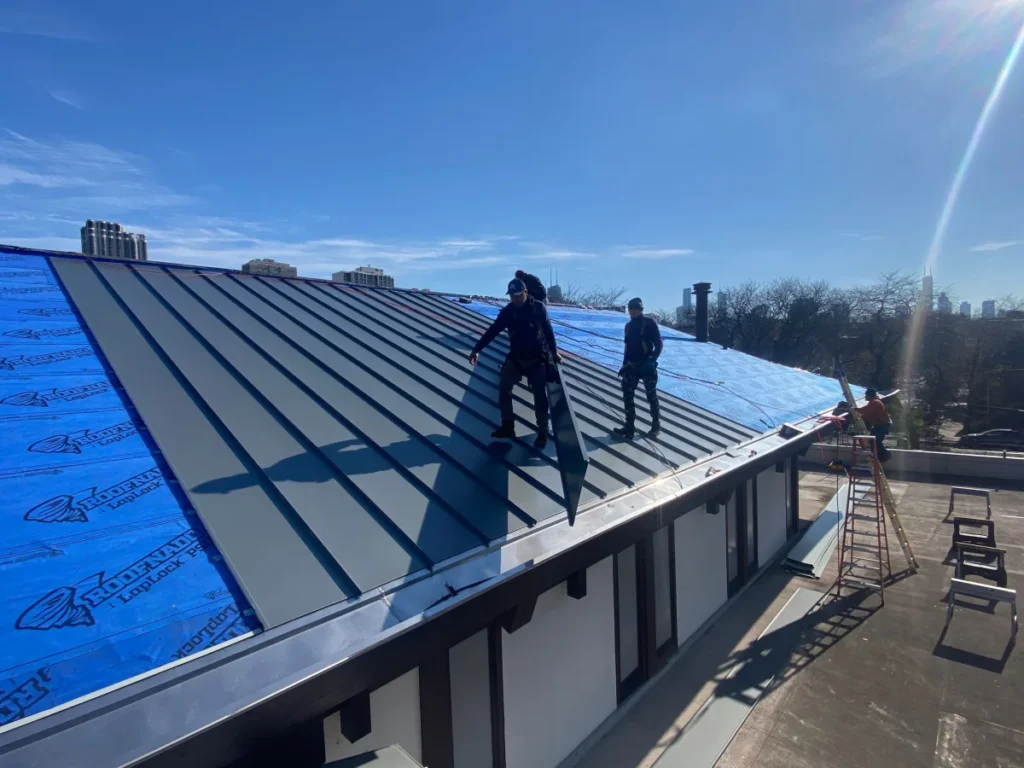
However, this does not mean that the material does not work – while the cold itself does not have a very negative effect on steel, temperature fluctuations have a greater impact. As is well known, steel contracts when exposed to cold and expands when exposed to heat. Many years of such cycles cause micro-movements in the joints, loosening of screws, stress on seals, and minor deformations. However, the entire process of actual destruction is very long, as roofs are designed to withstand temperature changes. The most dangerous are extreme material temperatures – for example, 5°F or 158°F. It is these extremes that accelerate wear and tear the most.
UV radiation is not a major problem for steel roofs as long as they are protected with good quality coatings (e.g., Kynar 500 or comparable PVDF). It is the outer coating that is most important here, as the base material itself reacts very neutrally to solar radiation. If the roof owner skimps on the protective layer, the color may begin to fade after a few years.
Does it mean that the metal roof is the best option for someone with a budget high enough to cover the initial cost? Probably no, but we have never replaced a metal roofing products with asphalt shingles, but we have done several projects replacing asphalt roofs with metal.
If you are wondering what type of roofing to choose, you should definitely take into account the harsh climate of northern Illinois. To make it easier for you, below we have listed the results of a comparison of the durability of asphalt shingles and metal roofing:
| External factor | Asphalt shingles (20-30 years) | Steel roof (60-70 years) |
| High temperature in summer | High temperature speeds up the aging and degradation | High temperatures do not degrade steel |
| UV radiation | Significantly affects the condition of shingles | Only has a negative effect on the condition of shingles if the protective coating is of poor quality |
| Cold winters | The asphalt in the shingles hardens, making them more brittle | Steel is more susceptible to mechanical damage in freezing temperatures |
| Temperature fluctuations (daily) | They damage shingles mainly due to the freezing and thawing cycles of water | They cause the sheet metal to expand and contract |
| Temperature fluctuations (annual) | They cause thermal aging in the form of a gradual loss of their properties | They result in material fatigue and, after some time, loosening of connections |
| Storms | Strong winds can cause mechanical damage, e.g., through falling branches and lifting shingles. | Strong winds can cause mechanical damage, e.g., through falling branches, which can lead to corrosion. |
| Hailstorms | They pound the granules, reducing the material’s resistance to UV radiation and, in extreme cases, can cause mechanical damage | In extreme cases, they can cause mechanical damage |
| Water | It settles in various crevices, creating favorable conditions for the growth of moss and algae. During daily temperature fluctuations, it freezes and thaws, causing micro-cracks | If corrosion occurs, it accelerates the process |
| Moisture | It promotes the growth of moss and algae | If corrosion occurs, it accelerates the process |

(847)-947-6797