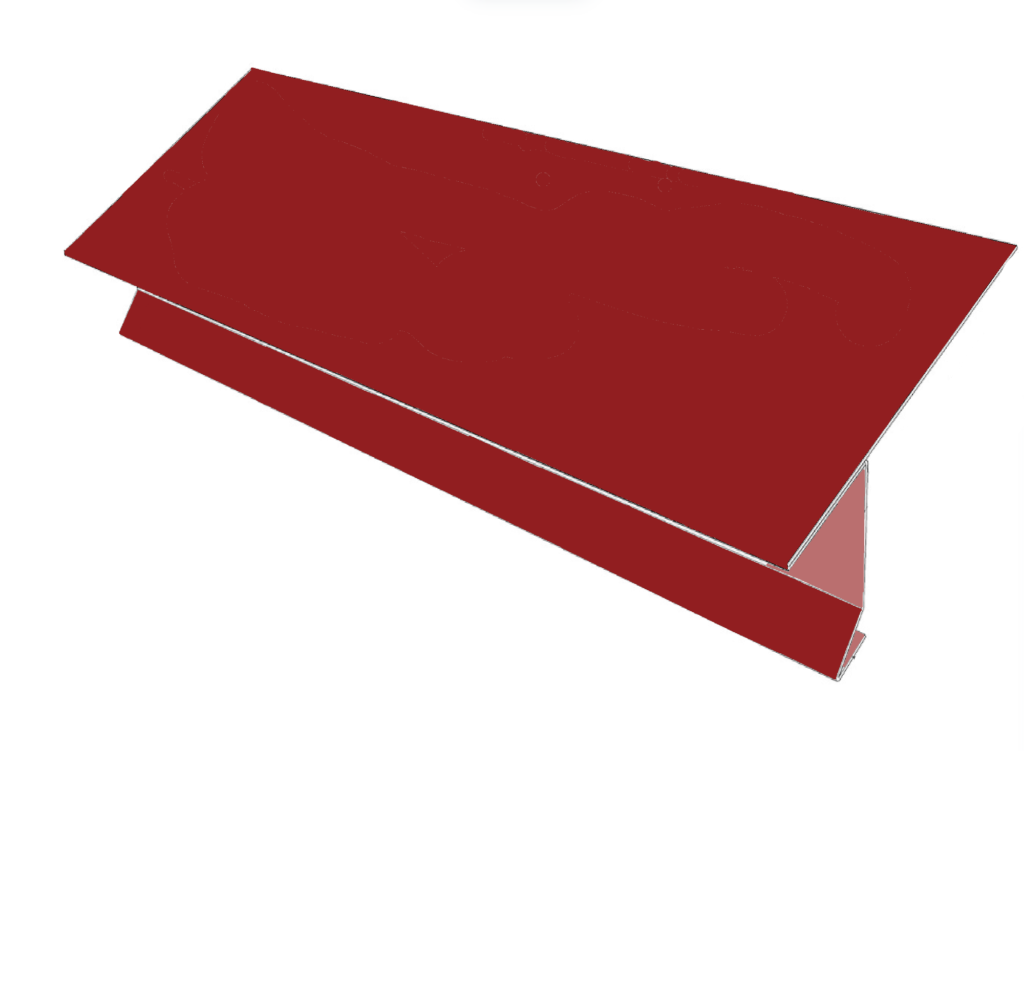


Drip edge flashing is a small but essential component of roof construction, designed to direct water away from the roof and protect its edges from moisture and damage. The market offers several primary types of drip edge, including T-style, F-style, and L-style, each engineered for specific applications and environmental conditions. In this article, we explore the most important types of roof flashing, their characteristics, and the situations in which they perform best.
Drip edge profile is a profiled trim installed on the eave edge or rake edge of the roof, which is designed to drain water from the roof and protect the sheathing from moisture. This element prevents water from getting under the roof covering (let’s say asphalt shingles) and protects the structure from corrosion and damage resulting from repeated freezing and thawing cycles – a phenomenon that is particularly dangerous on roofs and is one of the causes of roof leaks.
A properly selected and installed drip edge can work with various types of roofing, such as steel or aluminum, directing water straight into the rain gutter system. Proper water drainage is crucial, as insufficient protection of the roof drip edge can lead to moisture problems and deterioration of the roof sheathing, and in extreme cases, to roof leaks.
Roof drip edge is an essential addition to an efficient gutter system – especially when using different types of gutters tailored to your roof. This allows the entire roofing system to work more efficiently and significantly reduces the risk of damage to the structure and façade.
Metal flashing is available in several basic profiles, and choosing the right one should depend on the shape of your roof, other technical requirements, and aesthetic considerations.
T-style drip edge flashing is a profile with a cross-section shaped like the letter “T,” whose wide, vertical section provides protection for the roof edge against wind-driven rain, ice dams, and leakage. It is worth noting that in many regions of the United States, this type of flashing is sometimes referred to as D-style or gutter apron – these names are used interchangeably and describe a very similar, but exactly the same profile. Although T-style is slightly more expensive than standard profiles, it performs exceptionally well on roof rakes, where long overhang really matters. It’s crucial especially in locations with significant weather fluctuations, where roof edges must withstand heavy precipitation, strong wind, and freeze-thaw cycles.
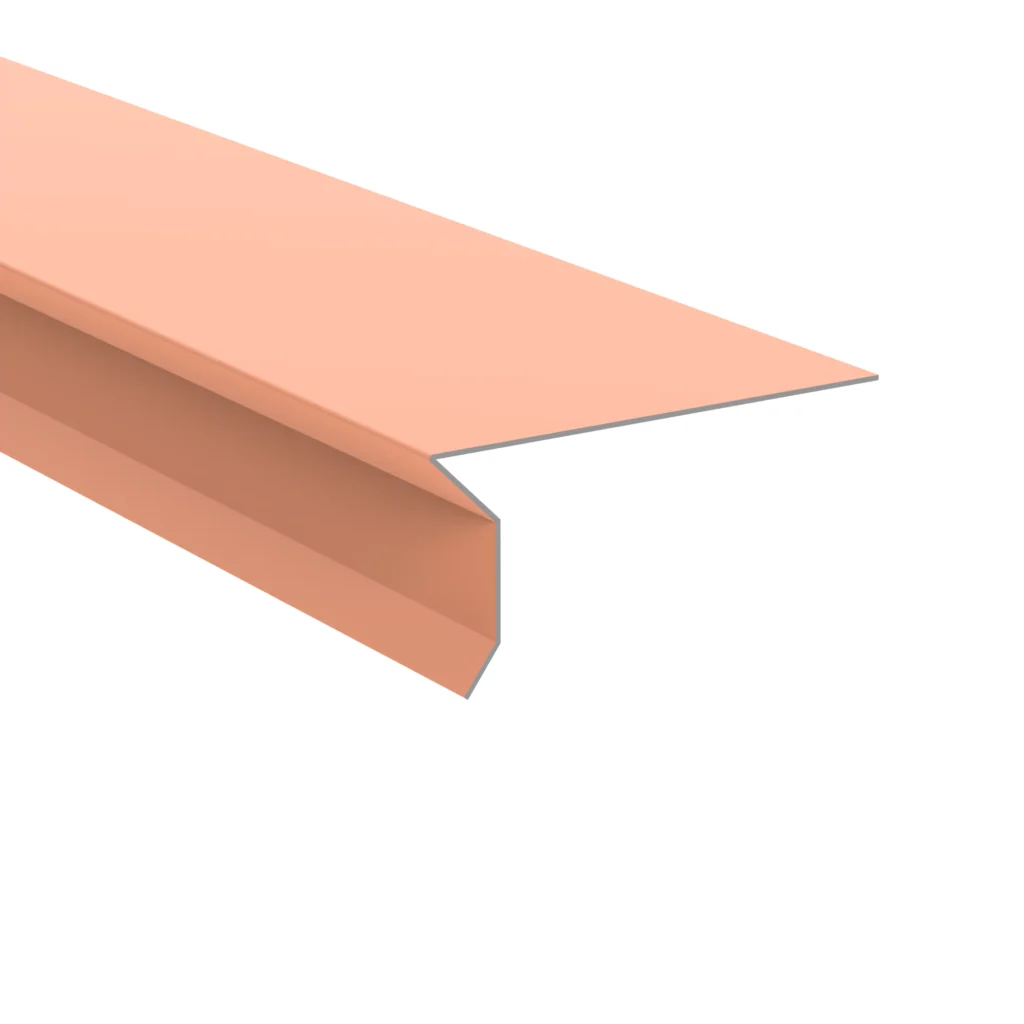
Copper D-style drip edge flashing is actually an improved version of the classic T-shape drip edge. Used on the edges of roofs covered with asphalt shingles and sometimes slate and terracotta tiles, it efficiently diverts water streams away from the fascia, which could degrade from excess moisture.
As a rule, T-style drip edge flashings are not installed on eaves – mainly because such a long overhang is not necessary, but increases the manufacturing cost. Therefore, sheet metal producers decided to create similar, but simpler shape – the D-style. D-style flashings are used primarily on eaves, but sometimes they can be also used in different places.
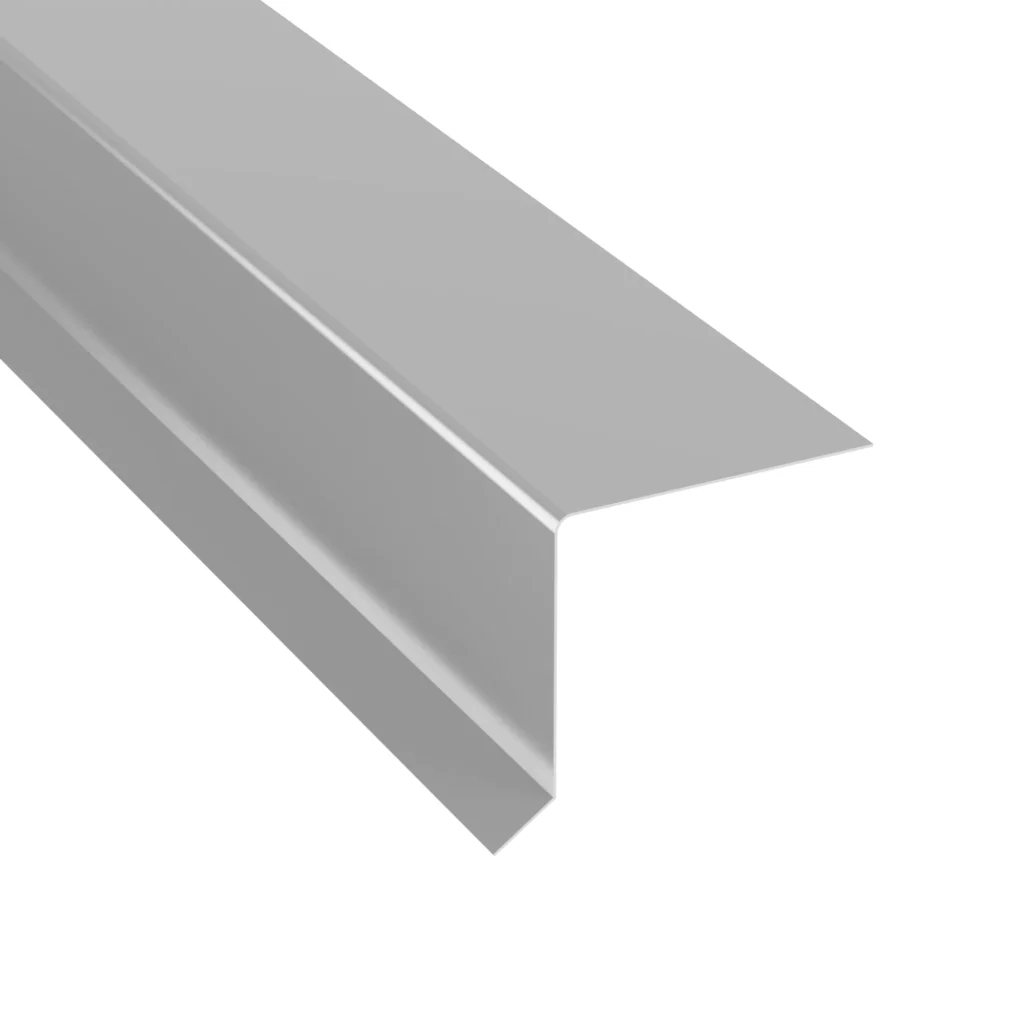
Galvalume drip edge flashings, sometimes called “baldy cleat,” are usually used on roofs covered with asphalt shingles, but can also be successfully used in conjunction with rubber, slate tiles and cedar shakes. Drip edge flashing is installed at the edge of the roof, thereby protecting the walls and sheathing from water that, due to adhesion forces, would not normally run off into the gutters. Thus, galvalume drip edge flashings are an indispensable part of any roof and should always be installed.
Each drip edge flashing produced by North Shore Sheet Metals is 10′ long. Upon request, we can make shorter as well as longer flashings.
L-style drip edge, sometimes called gutter apron, is the simplest and most universal flashing profile, featuring a cross-section resembling the letter “L.” Thanks to its minimalist construction, it provides basic protection for the roof edge against leakage and moisture while offering a clean, aesthetically pleasing finish. L-shape drip edge flashings works great when overlaping the gutter – this way, all the elements create the integrated and very watertight system.
L-style is often used on roofs with standard pitched roofs with fascia gutters, where achieving the watertight connection between sheet metals is fairly simple. This profile works well with lightweight roofing materials such as aluminum or steel, as well as with modern drainage system, particularly in situations where proper water flow control and prevention of common roof drainage issues are essential.
Choosing the right drip edge profile is needed for effective roof edge protection, as each style—T, D, or L—is designed for different working conditions and loads.
While you will hardly ever spot a roof leak caused solely by the wrong choice of the flashing, mistakes made at this stage indicate that the workmanship during the roof installation may have not been the possible. What’s more, wrong choice of flashings may increase the overall cost of the roof replacement. For a mid-size American house, oversized flashings will cost $200-$400 extra, for literally no reason.
The interaction between the roof drip edge and the gutter system is important just as much as their ability to direct the water away from the rakes —an incorrectly selected profile can cause water to overflow or back up, leading to moisture damage to the sheathing and siding, and consequently to the need for gutter servicing or eaves repairs. The right choice of drip edge is therefore important not only for the aesthetics and durability of the roofing, but also for the proper functioning of the entire water drainage system.
Proper installation of roof drip edge is crucial for protecting the roof edge from leaks, water runoff, and damage caused by wind and moisture. The profile must be installed with the correct overhang to work effectively with the gutter system, with the proper overlap and mechanical fastening — typically using roofing nails — to create a continuous protective barrier. Precise workmanship is of great importance, so it is worth entrusting the installation to a suitable specialist.
An incorrectly installed drip edge can lead to leaks, moisture damage to the sheathing, water overflowing the gutter, or shingles coming loose in strong winds. In areas prone to heavy rainfall, ice jams, or strong gusts, installation errors quickly become apparent, especially in the eaves area, where water is most likely to flow back under the roofing. A well-installed eave flashing by a reputable roofing company stabilizes the entire eaves system and protects the shingle roofs from damage that often leads to costly repairs.
The drip edge also plays an important role in maintaining proper ventilation and moisture control within the eaves. A properly installed profile helps to drain water away from the edge of the roof and reduces the risk of condensation and mold growth in critical areas of the structure.
Roof drip edge is most often made of galvalume (galvalume steel), sometimes aluminum or copper — and the choice of material affects the durability and resistance of the flashing.
Per general rule, copper flashings are used mostly along with cedar shakes and composite shakes – this is because their corrosion resistance and aesthetics. At the same time, most of the houses in America have galvalume steel flashings installed. Their characteristics are sufficient enough for statistically average use, and at the same time, their price is as much as 3 times lower. Aluminum is also a great option, but because of it’s slightly higher price, it’s not that popular, especially in the Illinois and neighboring states.
The choice of the right material should take into account both the climate and the style of your home, as it directly affects the service life of the entire eaves system. The go-to option is galvanized steel, however.
Roof drip edge is a small but extremely important element of the roofing system, responsible for protecting the edge of the roof, effectively draining water, and safeguarding the sheathing from moisture. The right choice of profile—T, F, or L—and the right material are crucial for the durability of the structure and the roof’s resistance to weather conditions. Equally important is professional installation, which eliminates the risk of leaks and damage to the eaves.
A well-designed and properly constructed Eave flashing is an investment that significantly extends the life of the roof and improves the comfort of use of the building—whether it is new construction or a modernization of an existing system. If the project requires the highest quality materials and precisely crafted flashings, it is worth working with experienced specialists and using solutions tailored to local climatic condition
In most construction projects in the United States, a drip edge is standard and one of the key elements protecting the eaves from water intrusion and damage caused by wind and moisture. Although local requirements may vary, professional contractors always recommend installing a drip edge as part of the roof’s basic protection.
The choice depends on the roof structure and weather conditions. Most likely you will need at least two types of edge finishes. While T-style provides longer overhang, D-style is much more rigid and durable. At the same time, L-style is the best options if you have K-style gutters attached to the fascia.
For single-family homes, galvanized steel is the most popular and the safest option. Copper is a premium option – extremely durable and the most resistant to weather conditions, and, as a result frequently used in high-end projects.
The most common signs include water leaking at the eaves, corrosion of the flashing, deformation of the profile, damaged shingles, or moisture on the fascia board. These issues are often associated with typical roof leaks.
Yes, but it’s usually not recommended. F-style profiles in particular are designed with retrofitting in mind. This is a common practice during gutter replacement or repairs to the roof edge.

(847)-947-6797