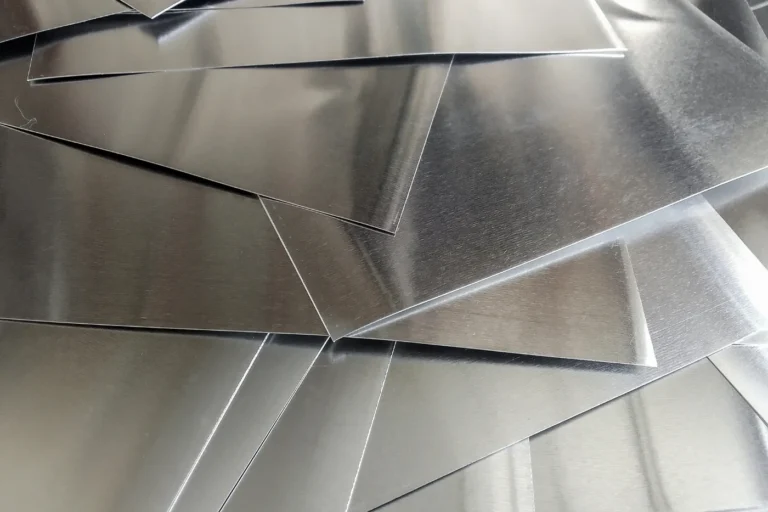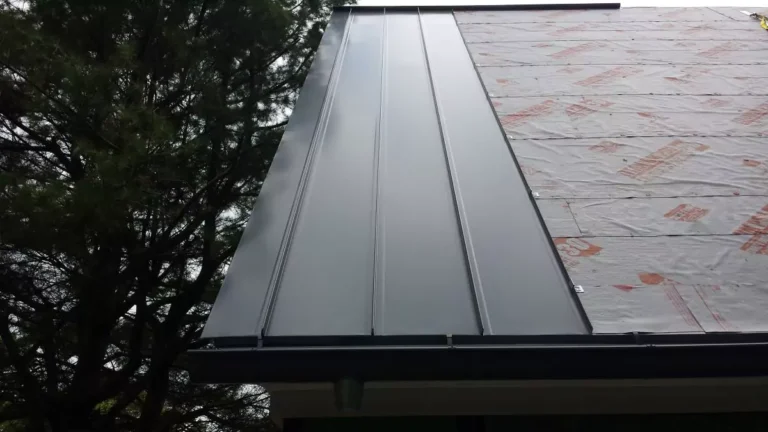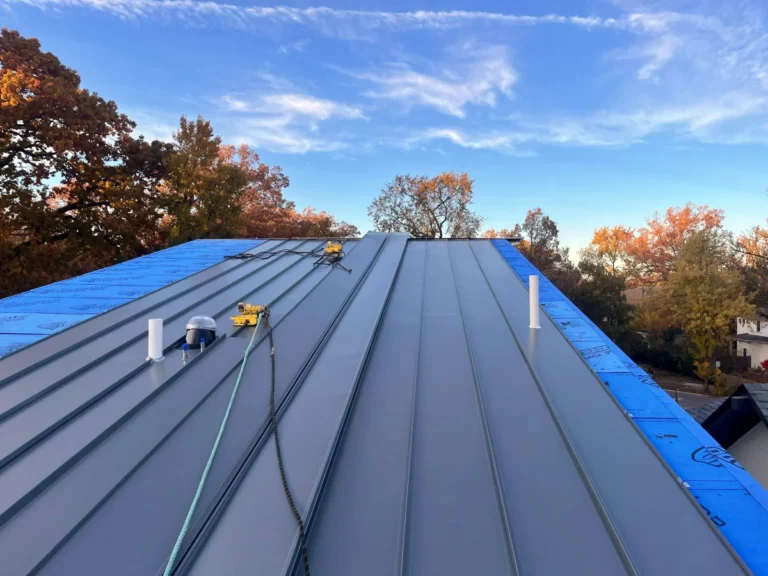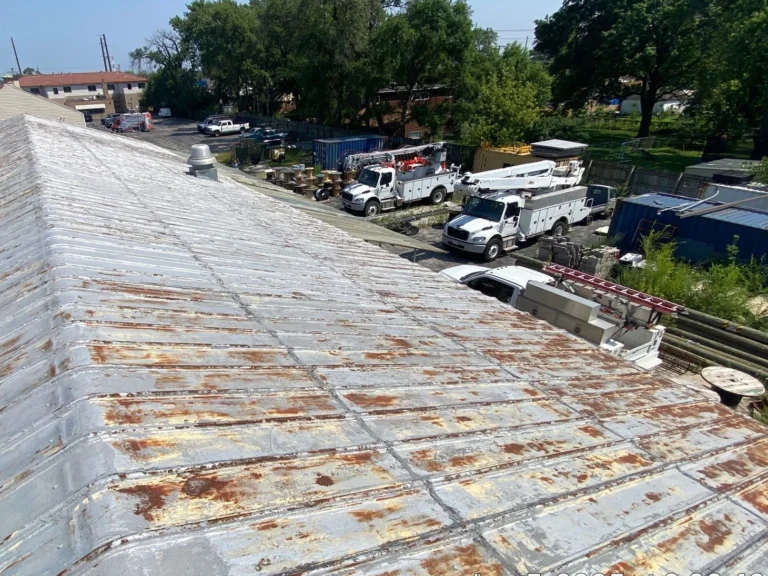
Sheet metal thickness affects, among others, strength, weight and its purchase price. Choosing between available options may have significant impact on the budget as well as the durability of newly installed flashings or roof. In this article we will explain you factors need to be considered and how to choose an ideal sheet metal thickness.
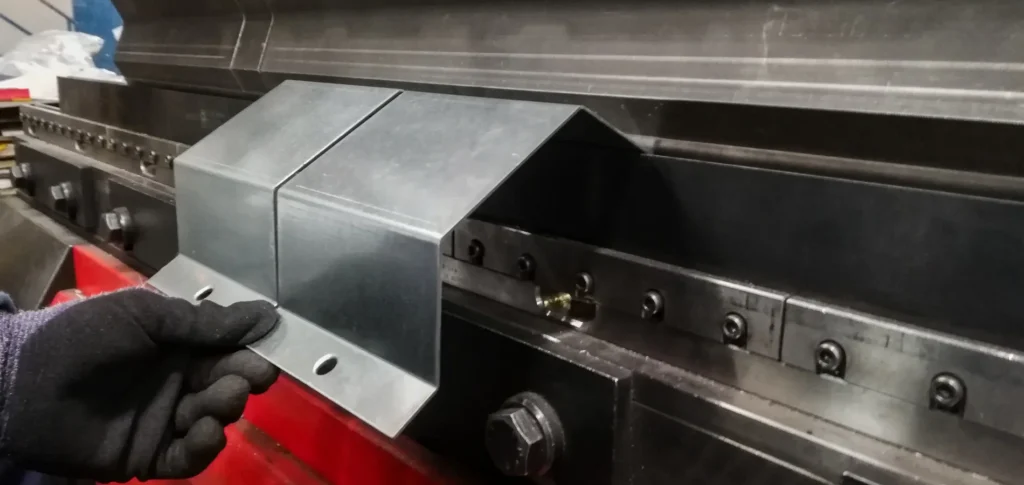
There are several ways of expressing the thickness of sheet metal. While the most popular units are obviously gauges and inches, sometimes technical sheets use measures in millimeters, mils or pounds per square foot (especially popular for copper). Gauges are convenient, but they are least universal. Mils and inches are much more precise, but at the same time, usually less intuitive for contractors.
In the simplest terms, sheet metal thickness is the distance between the two main surfaces of the material. In the construction industry, it usually refers to the nominal thickness, excluding any coating (such as Kynar® 500 resin-based PVDF coating) or protective film. However, some manufacturers calculate this dimension differently, using the actual measured thickness instead. This distinction is particularly important when comparing painted steel or aluminum sheets.
There are several ways to express sheet metal thickness. While the most common units are gauges and inches, technical specifications may also use millimeters, mils, or pounds per square foot (a measurement especially common for copper). Gauges are convenient, but they are the least universal. Inches and mils are much more precise, although they are often less intuitive for contractors.
Just as we mentioned before, the most common unit of measurement in the United States is the inch. Generally speaking, the thinner the sheet metal, the lighter and less durable it tends to be. The table below may help you understand which thicknesses are considered lightweight and which are regarded as more durable.
| Material | Typical thickness | Common use |
|---|---|---|
| Steel | 0.018 in. | 26 ga, lighter roofing panels and flashings |
| 0.024 in. | 24 ga, standard commercial roofing and higher-quality flashing | |
| 0.030 in. | 22 ga, heavy-duty roofing, copings, fascia and high-wind applications | |
| Aluminum | 0.024 in. | light flashing and trim |
| 0.032 in. | standard aluminum roofing and architectural flashing | |
| 0.040 in. | heavier roofing, fascia, copings and exposed trim | |
| 0.050 in. | heavier custom-fabricated architectural elements | |
| Copper | 0.0162 in. | 12 oz copper, light-duty flashing |
| 0.0216 in. | 16 oz copper, standard flashing, trim and many roofing details | |
| 0.0270 in. | 20 oz copper, roofing, valleys, built-in gutters and heavier details | |
| 0.0323 in. | 24 oz copper, heavy-duty architectural work | |
| 0.0431 in. | 32 oz copper, unusually demanding applications |
It’s worth adding that one mil equals 0.001 inch, therefore 0.024″ aluminum is the same as 24 mil aluminum. This unit is obviously much more convenient to use since there’s no need to use zeros.
Sometimes, you may encounter specs in metric units. In this case scenario, typical thickness will obviously get changed:
| Material | Typical thickness | Common use |
|---|---|---|
| Steel | 0.46 mm | 26 ga, lighter roofing panels and flashings |
| 0.61 mm | 24 ga, standard commercial roofing and higher-quality flashing | |
| 0.76 mm | 22 ga, heavy-duty roofing, copings, fascia and high-wind applications | |
| Aluminum | 0.61 mm | light flashing and trim |
| 0.81 mm | standard aluminum roofing and architectural flashing | |
| 1.02 mm | heavier roofing, fascia, copings and exposed trim | |
| 1.27 mm | heavier custom-fabricated architectural elements | |
| Copper | 0.41 mm | 12 oz copper, light-duty flashing |
| 0.55 mm | 16 oz copper, standard flashing, trim and many roofing details | |
| 0.69 mm | 20 oz copper, roofing, valleys, built-in gutters and heavier details | |
| 0.82 mm | 24 oz copper, heavy-duty architectural work | |
| 1.09 mm | 32 oz copper, unusually demanding applications |
Gauge is a traditional thickness classification system that developed from early wire-drawing and metalworking practices, long before decimal measurements became standard. Because higher gauge numbers historically corresponded to progressively thinner wire or sheet, a lower number still indicates thicker metal today, so 22 gauge is thicker than 24 gauge, and 24 gauge is thicker than 26 gauge. The scale is not linear, which means that the difference in actual thickness between consecutive gauge numbers is not constant and may also vary depending on the material and gauge standard used.
| Material | Gauge / designation | Approximate thickness | Common use |
|---|---|---|---|
| Steel | 26 ga | 0.46 mm | lighter roofing panels and flashings |
| 24 ga | 0.61 mm | standard commercial roofing and higher-quality flashing | |
| 22 ga | 0.76 mm | heavy-duty roofing, copings, fascia and high-wind applications | |
| Aluminum | 24 ga equivalent | 0.61 mm | light flashing and trim |
| 22 ga equivalent | 0.81 mm | standard aluminum roofing and architectural flashing | |
| 20 ga equivalent | 1.02 mm | heavier roofing, fascia, copings and exposed trim | |
| 18 ga equivalent | 1.27 mm | heavier custom-fabricated architectural elements | |
| Copper | 12 oz | 0.41 mm | light-duty flashing |
| 16 oz | 0.55 mm | standard flashing, trim and roofing details | |
| 20 oz | 0.69 mm | roofing, valleys and built-in gutters | |
| 24 oz | 0.82 mm | heavy-duty architectural work | |
| 32 oz | 1.09 mm | unusually demanding applications |
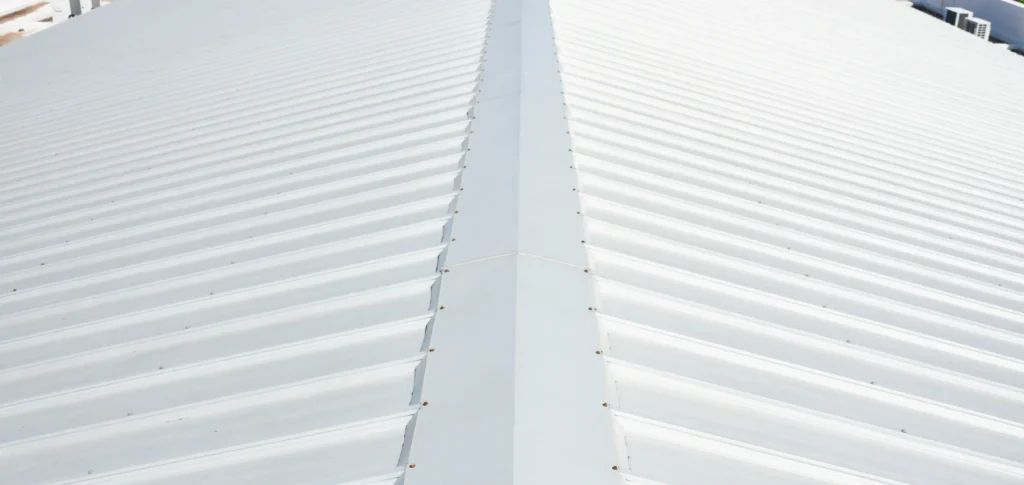
Gauge is not a universal unit of measurement because the actual thickness assigned to a gauge number depends on both the material and the gauge standard being used. For example, 24-gauge carbon steel, 24-gauge stainless steel, and 24-gauge aluminum may all have different decimal thicknesses, even though they share the same gauge number.
This is why a description such as “24-gauge sheet metal” is incomplete. It does not tell the buyer what the sheet is made from, whether the stated value refers to nominal or minimum thickness, or whether coatings are included in the measurement. A clearer specification would be:
24-gauge galvanized steel, 0.024-inch nominal base metal thickness
When comparing sheet metal products, always verify the material type, nominal thickness, minimum base metal thickness, coating designation, and manufacturer specifications. This is especially important when comparing products from different suppliers, because two sheets marketed under the same gauge number may not have exactly the same actual thickness or performance characteristics.
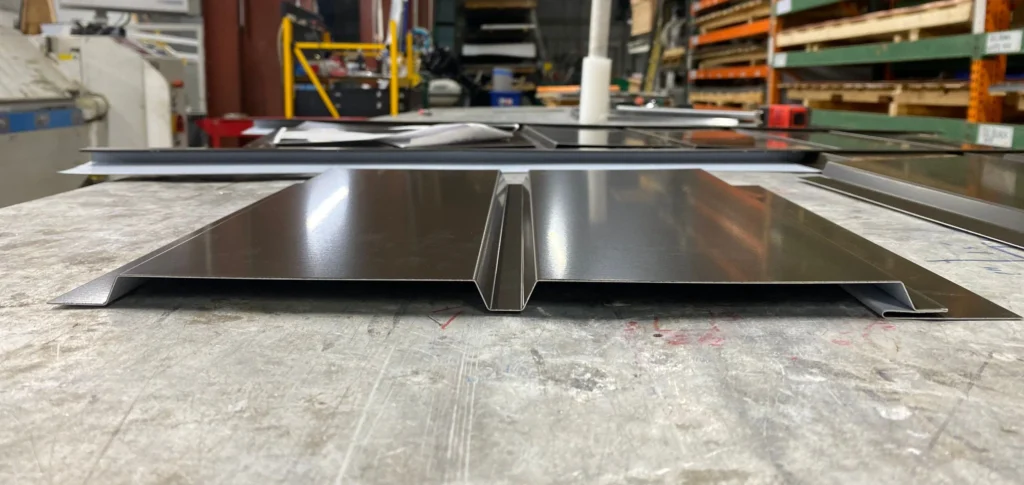
Increasing sheet metal thickness generally improves stiffness, reduces deflection, and makes the finished component more resistant to denting and local deformation. Even a relatively small increase in thickness can produce a noticeable improvement because the bending stiffness of a flat sheet rises approximately with the cube of its thickness. For example, increasing thickness from 0.018 inch to 0.024 inch adds about 33% more material but can theoretically provide more than twice the bending stiffness in an otherwise identical flat sheet.
Thicker metal also performs better around fasteners. It is less likely to elongate around screw holes, deform beneath clips, or allow the fastener head and washer to pull through the panel under wind suction. This is one reason 24-gauge steel is generally preferred over 26- or 29-gauge steel for demanding standing-seam roofs, perimeter zones, copings, and other components exposed to high wind loads.
Thickness, however, is only one part of the system. A deeply ribbed or corrugated 26-gauge panel may be considerably stiffer than a flat 24-gauge sheet because ribs, folds, seams, and hems increase the effective depth of the section. Panel width also matters: a narrow flat area is less likely to deflect or show oil canning than a wide, unsupported surface made from the same material.
Material grade is equally important. High-strength steel may carry greater loads than thicker mild steel, while aluminum is less stiff than steel at the same thickness and may need to be made thicker to achieve similar resistance to deflection. Stainless steel, copper, and other metals also have different strength, hardness, and forming characteristics, so equal thickness does not mean equal performance.
Support spacing and fastener layout can determine whether a panel performs properly. Increasing the distance between purlins, clips, hangers, or other supports increases bending and deflection, while closer spacing usually improves load capacity and surface stability. Fastener type, washer diameter, edge distance, spacing, and the strength of the substrate all affect pull-over and pull-out resistance.
As a practical rule:
For the same material and sheet size, weight increases directly with thickness. A sheet that is twice as thick contains approximately twice as much metal and therefore weighs about twice as much.
For example, one square foot of steel weighs approximately:
This means that increasing steel roofing thickness from 0.018 to 0.024 inch raises material weight by about 33%. Across a 2,000-square-foot roof, the difference is approximately 490 lb before accounting for seams, overlaps, clips, fasteners, and waste.
Higher weight affects shipping costs, the number of workers needed to move long panels, the risk of damage during handling, and the load imposed on the supporting structure. Long, heavy panels may also be more difficult to lift safely without bending, twisting, or damaging their edges.
Weight comparisons must always use the same material. Aluminum is much lighter than steel, while copper is heavier, so sheets with identical dimensions and thicknesses may have significantly different weights.
Thicker sheet metal normally costs more because it contains more raw material per square foot. Increasing thickness from 0.018 to 0.024 inch adds approximately 33% more metal, while increasing it from 0.024 to 0.030 inch adds another 25%.
The final cost does not always rise by exactly the same percentage because pricing also depends on material grade, coating, finish, coil availability, order size, fabrication time, and market conditions. Less common thicknesses may cost disproportionately more if they require a special order or separate production run.
Thicker metal may also increase fabrication and installation costs. It requires greater cutting and bending force, larger bend radii, stronger machinery, and more effort to handle and install. Heavy sheets can slow down production, increase equipment wear, and make detailed flashing work more difficult.
The thickest available sheet is therefore not always the most economical choice. Thickness should be increased when it provides a measurable benefit, such as greater span capacity, dent resistance, wind performance, or service life. Using heavy material for small, fully supported, low-risk details may add cost and installation difficulty without meaningfully improving performance.
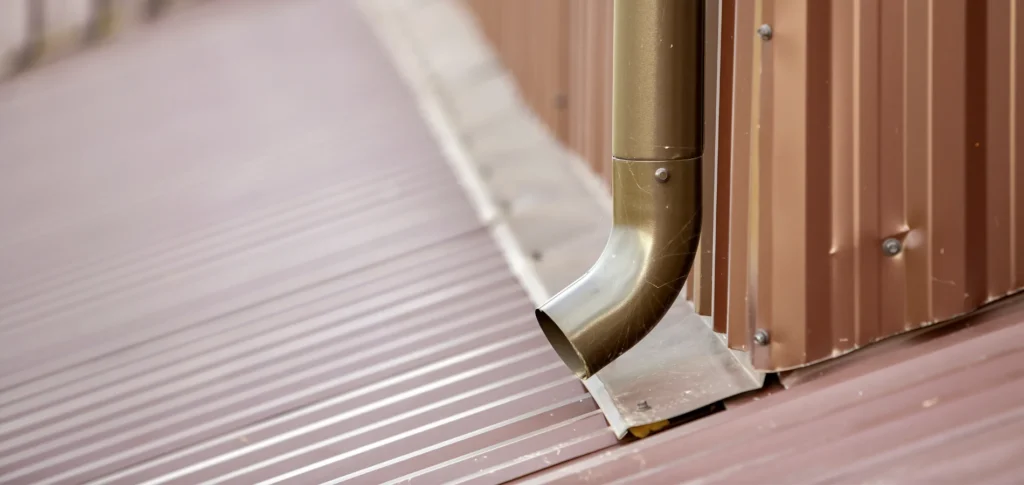
For most steel roofing projects, the practical choice is between 29, 26, 24, and 22 gauge. Lower gauge numbers indicate thicker steel, with approximate thicknesses of 0.014 inch for 29 gauge, 0.018 inch for 26 gauge, 0.024 inch for 24 gauge, and 0.030 inch for 22 gauge.
29-gauge steel is primarily suited to economical exposed-fastener roofing installed over continuous plywood or OSB sheathing. It is commonly used on sheds, garages, agricultural buildings, and budget residential projects. It should not be treated as the default choice for architectural standing-seam roofs, long unsupported spans, or highly exposed buildings. Manufacturers commonly offer 29-gauge panels for exposed-fastener systems tested over substrates such as 1/2-inch plywood.
26-gauge steel is the recommended starting point for a better-quality exposed-fastener residential or light-commercial roof. It provides noticeably better resistance to denting, handling damage, fastener pull-over, and visible deformation than 29 gauge. It is also widely used for corrugated and ribbed panels installed over solid decking or open framing, provided that the exact panel assembly has been tested for the required wind and snow loads. Commercial exposed-fastener systems are commonly supplied in both 26 and 24 gauge.
24-gauge steel is the most appropriate default for architectural standing-seam roofing, commercial buildings, premium residential roofs, long roof panels, and locations with substantial wind, snow, hail, or maintenance traffic. It is thick enough to provide better panel stability and dent resistance while remaining practical for on-site roll forming and detailed flashing work. Many tested standing-seam systems use 24-gauge steel, and industry guidance identifies it as the most common thickness for commercial metal roofing.
22-gauge steel should be reserved for heavy-duty structural roofing, buildings exposed to high wind pressures, roofs installed directly over widely spaced purlins, large canopies, and projects requiring unusually high resistance to impact or deformation. It is also worth considering in roof perimeter and corner zones, where wind-uplift pressures are highest, but only when the tested system and engineering calculations support the substitution. Manufacturers commonly offer 22 gauge as an optional thickness for structural and heavy-duty exposed-fastener panels.
As a practical rule:
Do not assign a universal maximum support spacing to any gauge. A 24-gauge flat or low-rib panel may carry less load than a properly engineered 26-gauge structural panel with a deeper profile. Support spacing must come from the manufacturer’s tested load tables and must match the exact panel width, seam type, clip, fastener, substrate, wind pressure, and snow load.
Architectural snap-lock standing-seam panels should generally be installed over continuous decking unless their documentation explicitly allows open framing. Panels installed directly over purlins should be structural systems designed and tested for that purpose. Increasing the steel thickness does not automatically convert an architectural panel into a structural roofing system.
Planning a roof replacement? Explore our wide range of sheet metal roofing
Flashing must be thick enough to retain its shape, resist wind and handling damage, and remain flat against the substrate, but it must also be flexible enough to form around corners, penetrations, valleys, chimneys, and wall transitions. For most roofing work, practical thicknesses are 0.018 to 0.024 inch for steel, 0.024 to 0.032 inch for aluminum, and 16 to 20 oz per square foot for copper.
For steel flashing, use approximately 0.018-inch, 26-gauge steel for short and relatively simple residential details installed over continuous support. Choose 0.024-inch, 24-gauge steel for standing-seam roof flashings, long trim sections, exposed valleys, parapet details, and commercial roofing. Use 0.030-inch, 22-gauge steel mainly for heavy-duty edge metal, coping, fascia, cleats, or details exposed to high wind and frequent mechanical damage. For most ordinary roof flashing, 22-gauge steel is unnecessarily difficult to cut and bend on site.
For aluminum flashing, 0.024 inch is suitable for light residential trim and small, fully supported details. Use 0.032 inchas the standard choice for exposed architectural flashing, roof edges, fascia, and longer custom-fabricated sections. Thicknesses of 0.040 to 0.050 inch are better suited to heavy fascia, coping, gravel stops, edge metal, and other components that must resist deformation, rather than intricate flashing around small penetrations.
For copper flashing, use 16 oz copper, approximately 0.0216 inch, for standard step flashing, counterflashing, chimney details, roof penetrations, and most residential trim. Use 20 oz copper, approximately 0.0270 inch, for exposed valleys, base flashings, built-in gutters, slate or tile roofs, and details exposed to greater wear or movement. Copper lighter than 16 oz should generally be limited to specialized concealed or fully supported applications, while copper heavier than 20 oz is normally reserved for copings, edge components, and unusually demanding architectural work.
As a practical rule:
Do not make flashing thicker simply because a heavier material appears more durable. Excessively thick metal is harder to form accurately, may spring away from the substrate, and can make tight folds, hems, locks, and small transitions more difficult to execute. For edge metal and coping exposed to wind uplift, use a tested assembly with the specified cleats, fasteners, joints, and attachment spacing rather than selecting thickness alone.
Searching for top-notch flashings? Check our custom roofing flashings
Gutter and downspout thickness directly affects resistance to denting, ladders, falling branches, ice loads, handling damage, and deformation between supports. For most residential systems, practical material choices are 0.027 to 0.032-inch aluminum, 26 to 24-gauge steel, or 16 to 20 oz copper.
For aluminum gutters, 0.027 inch is a common minimum for standard residential seamless gutters in moderate conditions. Choose 0.032 inch for better-quality residential work, larger 6-inch gutters, homes exposed to snow, falling branches, or frequent ladder contact, and installations where greater dent resistance is required. Aluminum thinner than 0.027 inch should generally be limited to low-cost or lightly exposed applications, while 0.040 inch is more appropriate for custom box gutters, commercial work, and unusually demanding conditions.
For steel gutters, 26-gauge steel, approximately 0.018 inch, is suitable for ordinary residential gutters and downspouts with adequate support. Use 24-gauge steel, approximately 0.024 inch, for commercial gutters, large box gutters, high-snow areas, long exposed runs, and locations where greater impact resistance is required. 22-gauge steel, approximately 0.030 inch, is normally reserved for heavy-duty custom gutters, industrial buildings, and large drainage systems rather than standard residential work.
For copper gutters and downspouts, 16 oz copper, approximately 0.0216 inch, is suitable for standard residential downspouts and many hung gutter systems. Use 20 oz copper, approximately 0.027 inch, for exposed hung gutters, built-in gutters, large profiles, premium architectural work, and locations subject to greater ice or mechanical loads. The Copper Development Association specifies 16 oz copper for typical hung gutters and downspouts, while built-in and more substantial hung gutters are commonly formed from 20 oz copper.
As a practical rule:
Thickness alone does not determine gutter performance. Hanger spacing, gutter profile, drainage capacity, roof area, snow and ice exposure, and the strength of the fascia attachment are equally important. As a general residential starting point, place gutter hangers approximately 24 inches on center, reducing the spacing to about 12 to 18 inches in areas exposed to heavy snow and ice or where the fascia and system design require closer support.
Larger gutters are not automatically stronger. A wide 6-inch gutter may require thicker material or closer hanger spacing because it can hold more water and ice than a 5-inch profile. Box gutters and built-in gutters should be designed as complete assemblies with adequate slope, expansion joints, outlets, overflow provisions, and support beneath the metal.
Downspout size should be selected according to roof drainage area and local rainfall intensity rather than metal thickness alone. A typical residential system uses 2 × 3-inch downspouts with 5-inch gutters or 3 × 4-inch downspouts with 6-inch gutters, with the larger option providing substantially greater drainage capacity. Long gutter runs should be divided between multiple outlets, and SMACNA treats approximately 50 feet as a practical maximum gutter length served by one downspout to limit thermal movement and drainage problems.
Yes. Lower gauge numbers normally indicate thicker sheet metal.
Yes. For steel building products, 24 gauge is commonly around 0.024 inch, while 26 gauge is commonly around 0.018 inch.
No. Gauge values vary by material. Compare actual thickness in inches or millimeters.
Not always. Product documentation should clarify whether the listed thickness refers to base metal or total coated thickness.
No. Thicker metal is heavier, more expensive, and more difficult to form. The correct thickness depends on the application.
Yes, but a micrometer is usually more accurate for thin sheet metal.
They may use different materials, standards, nominal values, minimum values, or rounded conversions.
There is no universal answer. The correct thickness depends on the roof system, loads, panel design, support spacing, and manufacturer requirements.

(847)-947-6797